

leading paragraph:
Your old jeans feel stiff and restrictive. You want the classic denim look without sacrificing comfort. Stretch jeans solve this problem, but are they still "real" jeans?
snippet paragraph:
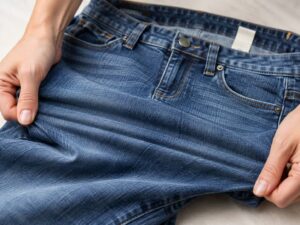
Most jeans now include spandex (elastane)[^1] to add comfort and improve shape retention. Pure 100% cotton denim doesn't stretch, which can feel restrictive. Adding just 1-2% spandex allows the jeans to move with you and prevents them from bagging out at the knees.
Transition Paragraph:
In my two decades of running a denim factory, the shift towards stretch denim has been one of the biggest changes in the industry. It's not that "all" jeans have spandex, but the vast majority of what you see in stores do. The reason is simple: it solves some of cotton's biggest problems. But this change comes with trade-offs that denim purists and designers like Dean think about all the time.
Why are all jeans stretchy now?
leading paragraph:
You bend down, and your rigid jeans dig in. This constant restriction is uncomfortable. Stretch denim offers a freedom of movement that pure cotton just can't match, solving this daily discomfort.
snippet paragraph:
Jeans are stretchy now because consumers demand comfort[^2]. Spandex, an elastic fiber, is blended with cotton to allow for easy movement. It also helps the jeans keep their shape and prevents them from becoming baggy at the knees and seat after a few hours of wear.

Dive deeper Paragraph:
At my factory, DiZNEW, the decision to add spandex comes down to a simple goal: improving the wearer's experience. Pure, 100% cotton denim is strong, but it has zero give. This means every time you squat, climb stairs, or even sit for a long time, the fabric fights against you. Spandex changes the game completely. It's a synthetic fiber that can stretch up to seven times its original length and snap right back.
When we weave a small amount of it—usually just 1% to 3%—into the cotton, the entire fabric gains a comfortable elasticity. This stretch provides two key benefits:
- Comfort and Mobility: The fabric moves with your body instead of against it. No more feeling constricted.
- Shape Retention (Recovery): Pure cotton jeans tend to "bag out" at the knees or seat after you've worn them for a day. The spandex acts like a rubber band, pulling the fabric back into its original shape. This means your jeans look and fit better, for longer.
For a designer, this means you can create slimmer, more form-fitting silhouettes that are still incredibly comfortable for the customer to wear all day. It's a win-win for modern lifestyles.
Why does Gen Z hate skinny jeans?
leading paragraph:
Skinny jeans defined fashion for over a decade. Now, younger generations see them as restrictive and dated. This shift has left many people wondering what happened to the once-mighty skinny jean.
snippet paragraph:
Gen Z’s preference for looser fits is a reaction against the super-tight, high-spandex skinny jean trend. They favor comfort and a more relaxed, authentic aesthetic. This trend embraces 100% cotton, non-stretch styles like mom jeans, straight-leg cuts, and baggy '90s-inspired silhouettes.

Dive deeper Paragraph:
It's fascinating to watch fashion cycles from my perspective as a manufacturer. Skinny jeans were only possible on a mass scale because of spandex. Without it, they'd be impossible to put on. For years, the trend was about creating a second-skin fit. But now, the pendulum is swinging back.
Gen Z's fashion taste is heavily influenced by '90s and early 2000s revival culture, which was dominated by looser, more relaxed fits. There's a strong desire for clothing that feels more authentic and less "try-hard." Rigid, 100% cotton denim has a character and structure that you just don't get from a super-stretchy fabric. It hangs on the body differently. The move towards wider-leg, straight-leg, and baggy jeans is also a move towards comfort in a different way—not the comfort of stretch, but the comfort of freedom and having space to move.
It isn't that Gen Z hates stretch entirely, but they have largely rejected the painted-on silhouette that skinny jeans represented. They've rediscovered the cool factor of classic, sturdy denim that has a life of its own.
Is 1% spandex good in jeans?
leading paragraph:
You see "1% spandex" on a label and wonder if it's enough to matter. It seems like such a tiny amount. You're unsure if it will provide any real comfort or just compromise the fabric.
snippet paragraph:
Yes, 1% spandex is the secret ingredient for perfect everyday jeans. This small amount provides noticeable comfort and flexibility for movement without sacrificing the classic look and feel of real denim. It's the ideal balance between comfort and character, preventing bagginess while retaining structure.

Dive deeper Paragraph:
In the industry, we often refer to fabric with 1-2% spandex as "comfort stretch," and it's the gold standard for a reason. That single percentage point makes a world of difference. It's just enough to take the edge off a rigid fabric, allowing you to squat and sit comfortably without the denim feeling like a suit of armor. At the same time, it’s not so much that the jeans lose their essential "denim" character. They still feel substantial.
When I work with clients, we carefully consider the fabric blend. The percentage of spandex completely changes the final product. Here's a simple breakdown of what different levels mean:
| Spandex % | Fabric Type | Best For |
|---|---|---|
| 0% | Rigid | Purists, vintage look, natural fades |
| 1-2% | Comfort Stretch | Everyday wear, slim & straight fits |
| 3-5% | Power Stretch | Skinny jeans, form-fitting styles |
| 5%+ | "Jeggings" | Maximum stretch, legging-like feel |
So, yes, 1% is not only good—it's often perfect. It gives you the best of both worlds: the durability and classic texture of cotton with just a hint of modern comfort.
Are there any jeans without spandex?
leading paragraph:
Finding non-stretchy jeans feels impossible these days. Every store seems to push comfort stretch. You miss the substantial, rugged feel of old-school denim and want to find a pair that lasts.
snippet paragraph:
Dive deeper Paragraph:
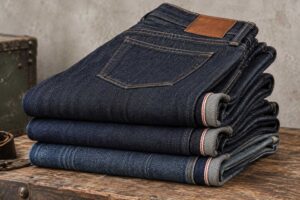
Absolutely. As a denim maker, 100% cotton jeans are the foundation of our craft. While stretch denim dominates the mass market, a passionate community of denim lovers will only wear rigid, 100% cotton jeans. We cater to them specifically.
These jeans are for people who appreciate the process of "breaking in" a pair. Raw denim is stiff at first, but over months and years, it molds to your body. The indigo dye wears away in patterns unique to you, creating what we call "cat's whiskers" on the lap and "honeycombs" behind the knees. This personalization is impossible with stretch jeans because the fabric's elasticity prevents it from holding a crease.
This is the world of "denimheads" and people who love vintage workwear. They value the "armor-like" feeling and the visible story that the jeans tell over time. Brands that focus on heritage, workwear, and selvedge denim almost exclusively use 100% cotton. So while you may have to look a bit harder, true, non-stretch denim is very much alive and well.
Conclusion:
Most jeans have spandex for comfort and shape. But 100% cotton jeans still exist for purists who love their durability and the way they personally fade over time.
---

[^1]: "[PDF] gender, apparel purchase decisions, and fiber composition ...", https://repositories.lib.utexas.edu/bitstreams/03558c04-e42c-4818-959b-cf0287183877/download. A contemporary textile-industry or market source documenting elastane use in denim would support the claim that stretch fibers are common in modern jeans, though it may describe market prevalence rather than prove the exact share of all jeans sold. Evidence role: statistic; source type: institution. Supports: Most jeans now include spandex or elastane.. Scope note: The article’s wording implies a broad retail majority; many neutral sources may only provide regional, sample-based, or market-segment evidence.
[^2]: "Denim Jeans Market Size, Share, Trends, Forecast 2034", https://www.fortunebusinessinsights.com/denim-jeans-market-116184. A consumer-behavior survey or apparel research source showing comfort as a leading purchase criterion for jeans would support the claim that comfort demand helps drive stretch-denim adoption, though it may not isolate spandex as the sole response to that demand. Evidence role: statistic; source type: research. Supports: Consumer demand for comfort is a key reason jeans increasingly use stretch materials.. Scope note: Consumer preference data may vary by age, country, gender, and price segment.