Skip to content

Your unique CAD files are your brand's most valuable asset. Sending them to a factory without verifying their IT security is a huge risk, leaving your designs exposed to theft.
A secure factory protects your design files with encrypted servers, strict access controls, and regular audits. They also use a Non-Disclosure Agreement (NDA)1 with specific clauses covering digital theft, ensuring your intellectual property remains private and protected.
In my early days, protecting a design was simple. A client would send us physical paper patterns. They were bulky, hard to copy accurately, and couldn't be emailed to a competitor in five seconds. Today, everything is digital. I once had a client, a talented designer like Dean, who had a horror story.
He sent his new tech pack to a potential factory for a quote. Before he even got the first sample back, he saw a cheap knockoff of his unique pocket design for sale on a fast-fashion website.
That story changed my perspective forever. Our job is no longer just to be guardians of your fabric samples; we must be digital fortresses for your creative secrets.
You just emailed your new tech pack to the factory. Who sees it? The merchandiser? The pattern maker? The whole factory? Uncontrolled access exposes your IP to leaks with every single click.
We protect your CAD files by assigning access on a strict "minimum necessity" basis. Only the specific team members who need a file to do their job can open it, and their access is logged.
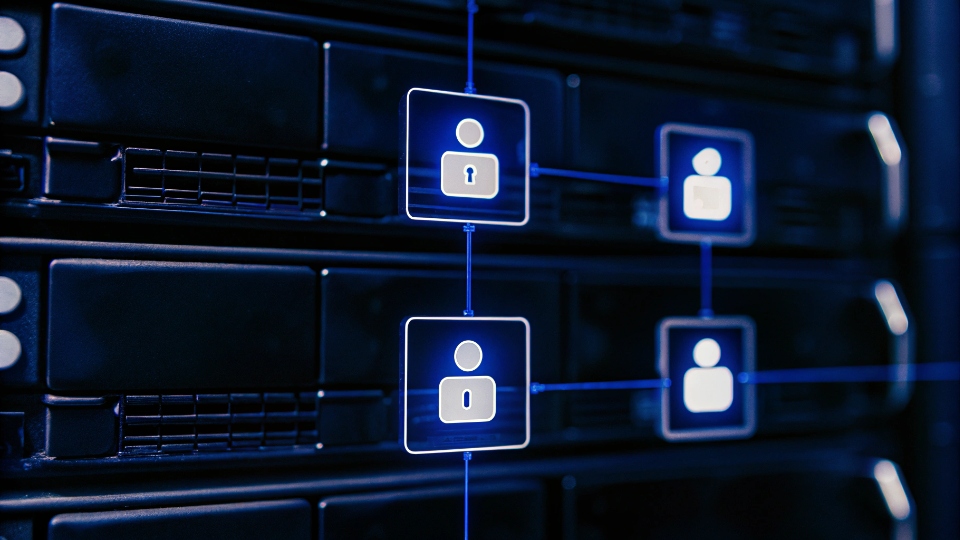
In our factory, your designs don't just land in a shared folder for anyone to see. We treat access to your intellectual property with the same seriousness as access to our company bank account.
We operate on a principle called "least privilege" or "minimum necessity." This means a person only gets the keys to the rooms they absolutely need to enter.
The pattern maker can access the pattern file, but not your cost sheets. The sample room sewer can see the construction guide but doesn't need the entire tech pack.
We enforce this with multi-factor authentication (MFA)3, requiring more than just a password. More importantly, every single action—viewing, copying, or modifying a file—is logged with a timestamp and user ID.
This creates a chain of custody, so you always know exactly who has interacted with your files and when. It turns a huge potential risk into a controlled, transparent process.
| Weak Security (Common Practice) | Our Secure System |
|---|---|
| Files sent via public WeChat/Email. | Files shared via encrypted portal. |
| Stored in a general "Client" folder. | Stored in your unique, access-controlled project folder. |
| Anyone in the office can open files. | Only assigned staff with MFA can access. |
| No tracking of who opens/copies files. | All file interactions are logged and audited. |
Are their servers ISO 27001 or equivalent certified?
You assume your files are safe on the factory's server. Is that server an old desktop in an unlocked office? Without certified standards, your data is vulnerable to both physical theft and digital hacks.
We prove our security with certifications. While ISO 270014 is the global benchmark, we use certified secure cloud platforms and enforce strict data protection policies that align with these international standards.
Asking about "ISO 27001" is a smart question for a designer like Dean. It shows you understand security is a formal process, not just a promise.
ISO 27001 is a framework for managing information security. While full certification can be complex for any business, a good factory lives by its principles.
For us, this means we don't store your sensitive files on a local computer in the office. We use enterprise-level cloud storage providers who are themselves certified and audited. Your data is protected by multiple layers of security.
We use disk-level encryption, so even if someone physically stole a hard drive, the data on it would be unreadable. We also use file-level encryption as an extra precaution. This commitment to using certified infrastructure means your files are protected by world-class security experts, 24/7.
We also have a strict data lifecycle policy. Your files are archived securely after production and then permanently deleted after an agreed-upon period to minimize long-term risk.
Can I audit their IT security practices?
The factory manager promises your files are safe, but how can you be sure? You are trusting them blindly with your future bestsellers, and this uncertainty creates a huge risk for your brand.
Yes, absolutely. We believe in "trust, but verify." We welcome security audits5 and will provide you with our policy documents, access logs, and will work with your team to ensure you have full confidence.

A factory that hides its security practices is a major red flag. A true partner is transparent. When a client asks to audit our security, we see it as a sign of a serious, professional relationship.
An audit doesn't mean you have to fly to China and try to hack our servers. It's a collaborative review to give you peace of mind. We can walk you through our entire security architecture, from the moment you send a file to the moment it's deleted.
We will show you our written IT security policies, our employee confidentiality training records, and the access logs for your specific project files.
We can also share our emergency response plan, which details exactly what happens and how we notify you in the unlikely event of a data breach. We regularly conduct our own internal drills, simulating a security threat to test our defenses.
Transparency is the foundation of trust, and we are happy to open our books to prove our commitment to protecting you.
What NDA clauses cover digital theft6 or leaks?
Your standard NDA covers physical samples. But what happens if a digital tech pack is leaked online? Without specific clauses for the digital age, you have no legal recourse or protection.
Your NDA must have a modern "Digital Assets" clause. It should explicitly define files like CADs and tech packs as confidential, extend protection to subcontractors, and specify the penalties for a digital breach.
A ten-year-old NDA template is not enough to protect a modern design business. The legal language must evolve with the technology.
Your Non-Disclosure Agreement is your most powerful legal tool, but only if it's sharp enough. We insist on an NDA that is crystal clear about digital IP.
It's not enough for it to say "designs." It must explicitly list "CAD files, tech packs, digital patterns, marker files, and any other digital derivative" as confidential information. The NDA must also include a "flow-down" clause.
This means if we need to share a file with a trusted third-party partner, like a specialized embroidery house, they are legally bound by the exact same confidentiality terms.
Most importantly, the agreement must outline the consequences of a digital breach, including our responsibility to investigate the leak and our liability for any damages caused to your brand. This turns a simple promise into a legally binding commitment.
| Weak NDA Clause | Strong Digital NDA Clause |
|---|---|
| "All designs are confidential." | "Defines 'Confidential Information' to include all digital files (CAD, tech packs, etc.)." |
| Only binds the factory. | "Clause extends NDA terms to all third-party subcontractors." |
| Vague on breach consequences. | "Specifies factory's liability and notification duties in case of a digital leak." |
| No mention of file return/deletion. | "Requires documented destruction of all digital files upon project completion." |
Conclusion
Protecting your digital designs is just as crucial as perfecting your denim wash. A secure factory partner acts as a digital fortress, safeguarding your intellectual property and ensuring your creative vision remains yours alone.
-
Understanding NDAs is crucial for protecting your designs and ensuring confidentiality. ↩
-
Understanding CAD files is essential for designers to protect their digital assets effectively. ↩
-
Learn about MFA to understand how it adds an extra layer of security to your files. ↩
-
Understanding ISO 27001 can help you choose secure partners for your designs. ↩
-
Learn how security audits can provide peace of mind regarding your data safety. ↩
-
Understanding digital theft is vital for protecting your designs in the digital age. ↩